Scroll down to read more about health issues including Big Head and Qld itch.
Index
1. Big head
2. Vitamins & Minerals
3. Qld Itch
4. Ulcers or wind sucking
5. Behavior Problems
6. Diarrhoea & worming
7. Recommended suppliers of health products
8. To rug or not to rug, that is the question?
9. Saddle fitting
10. Cancer
11. Greasy heel
12. Rain scald and mud fever
13. Splints
14. Worming
15. Seedy Toe or White Line Disease
For information about safe quality agistment on the Sunshine Coast please click this link
BIG HEAD
What is big head?
Calcium & Phosphorus deficiencies in horses, hyperparathyroidism (Bighead in horses) This is all too common in S.E Qld and must be addressed to prevent a possibly fatal occurrence or long term disability. It is easily treated, but do not delay.
The relationship between Ca. & P (calcium and phosphorus) intake is critical, the correct ratio is 1.1 : 1, and research trials up to 5:1 have been conducted with non-favourable results. The ratio offered to livestock will differ due to soil types and grasses, for example whether the soil is Phosphorus deficient, or the pasture includes buffel grass, pangola grass, para grass, and kikuyu and seteria grass. Please ensure you talk to a vet to help you asses your specific requirements. The ratio I am suggesting suits my local area and may not suit yours. I am in the Noosa Hinterland area, and the premixed DCP+CC product that I use is manufactured in Gympie by Cooloola custom Stock feeds (07) 5483 8766 and is suitable for the Sunshine Coast region plus Furneys Vet and Bone Formula which is sold in a 20KG tub and is chelated which allows for better uptake of the calcium and is also suited to this area and sub tropical grasses. Simply mix required amount with your horses wet feed and problem solved.
Quantity of DCP+CC (big Head Master) and Bone Formula to use:
In my experience over the last 10 yrs I have found that Thoroughbreds require the largest quantity of calcium mix and the older the TB the more it needs. You can judge your horse for yourself by observing the flare of the nostrils and bone just above the nostrils which form a ridge as they swell, if they start to flare where the bone begins the head is enlarging, so increase the quantity of calcium mix. You can also feel the width of the jaw bone (under the chin) which should be about 1.5cm width, much more denotes some bone enlargement.
For an old TB I would administer 100g of Bone Formula per day 7 days a week. For a miniature horse I would administer 50g per day.
Read the instructions and follow accordingly and if you feel you need to increase a little do so.
The DCP + CC (Big Head Master) is not chelated and is not as concentrated as the Bone Formula and therefore an average horse requires 1200g to 1400g per week.
See below for instructions on how to mix:
First purchase your 20kg ready mixed bag of Big Head Master or Furneys Vet and Bone or both (Cooloola Stock feeds Gympie (07) 5483 8766 to find your local supplier) Too many horses are getting sick due to incorrectly mixed batches in produce stores who mix their own, please do not risk it. Add the quantity you have decided on directly into your horses hard feed and mix with water. Do not feed dry. If you do not hard feed your horse then simply add the calcium mix to some chaff, plus a small amount of copra helps to sweeten it. Your horse will soon learn to love it, and them you can add some minerals (Equilibrium or Megamin, biotin for example) to it as well. It is highly recommended to add salt as this increases uptake of calcium.
Feed the mix a couple of times a week or daily if you horse gets hard fed daily. You can not over dose with calcium as your horse will simply poo the excess through, so if in doubt giving too much is safest.
More info:
If the horse ingests the wrong ratio of these minerals it will result in brittle bones, calcifications, fractures and eventually death. Another trap people fall into is thinking that a large majority of natural grasses and pastures are Calcium 'deficient' - they are not. They contain as much and sometimes more calcium than legume feeds, however, they also contain an additional calcium oxalate, which attaches, or binds to the calcium and will not allow for its uptake in the digestive system. When this happens, we end up with things like NSH (nutritional secondary hyperparathyroidism) or 'bighead' in the horse, named after the appearance of the horses enlarged head. Some people are also responsible for adding calcium to the ration without recognising the need to balance it with the Phosphorous, and too much calcium, as with too much phosphorous may give a similar result as 'bighead' in the form of phosphorous deficiencies. So as you can see, the balance of minerals is critical.
Horses can also develop big head if their diets contain wheat bran and pollard products. These diet components are high in calcium phytate which act in a similar manner to oxalate and not only bind calcium but also bind phosphorus in the process.
Interestingly, many horsemen report increased incidence of calcium deficiency and cases of big head within a few weeks of rainfall. It may be that rainfall triggers new growth that the horses find more palatable, or that the increased moisture increases the oxalate content of tropical grasses. Whatever the reason, reports suggest that increased cases of big head after rainfall are seen with in a matter of two to three weeks. Further research in this area could help horse owners to develop new pasture and grazing management practices to prevent horses from grazing dangerous pastures at times of high risk
White muscle disease has been linked with the inappropriate intakes of Selenium and Vitamin E as well.
Deficiencies of manganese, sulphur, potassium, cobalt, zinc and magnesium all contribute to poor bone development, stunted growth, poor or depraved appetites and general un-thriftiness. Long term deficiencies of salt will produce similar effects.
A calcium : phosphorus imbalance is most likely to occur when high grain rations are fed, and when horses graze tropical pastures with little feed nutritive value. While a calcium deficiency may not reduce size, the skeleton is weak, porous and fragile, and prone to breakdown. Phosphorus deficiencies usually occur when horses are restricted to grazing high legume pastures (lucerne). Phosphorus deficiencies usually retard animal growth as well as causing skeletal weakness.
High levels of a particular mineral may often interfere with the absorption of other minerals – for example, it is known that very high calcium supplementation leads to a depression of zinc absorption, and very high phosphorus levels will negatively influence calcium absorption. High grain diets immediately unbalance bone metabolism, as grains are low in calcium and reasonably high in phosphorus. Grass hays usually suffer the same imbalance. Obviously a horse in race training on high grain and hay diets has a major part of its daily intake derived from these two dietary components, with immediate negative results on bone strength, density and development.
Tropical grasses contain oxalate, which decreases calcium utilisation and uptake from diets. These grasses include Pangola, Green panic, Kikuyu, Buffel and Seteria.
Bone is formed by a complicated series of events. A simple explanation is that cells called "oesteoblasts" produce a framework of protein fibres called osteoid tissue. This tissue is calcified when the correct amounts of calcium, phosphorus, magnesium and other minerals are present in the blood stream.
High grain fed (high in phosphorus) horses need a little extra calcium.
Lucerne is high in calcium, so extra phosphorus may be needed.
So grain and lucerne can work well together.
Horses can also develop big head if their diets contain wheat bran and pollard products. Give horses on pollard or bran extra calcium
You can have your soil tested for Phosphorus levels.
Mineral Distributors for livestock in the paddock
You can build mineral distributors (see below)
TIME AND AGAIN stock keepers find it
difficult to comprehend that animals of all
kinds from geese to camels to ordinary farm
stock have a very good idea of which
minerals they need, and will help themselves
to minerals supplied. I have seen many
different animals take straight copper
sulphate when they need it! Human beings
seem not to possess that instinct.
An alternative to licks, and a possibly
easier and more efficient way of offering
necessary minerals, is supplying the lick
ingredients separately. It is less wasteful and,
after the initial setting up, it is easier to
service and to keep the ingredients
replenished. We have not had a case yet
where the stock will not help themselves to
the minerals they need.
Method
The mixture can be offered in two banks of
three or one long line of six containers. It
should be made weatherproof, as wet
minerals are not very appealing and could
lead to wastage. Anyone with basic welding
skills can make these frames by recycling
odds and ends on the farm.
Find six food-grade 20-litre plastic drums.
Cut off the tops (using a chain saw is the
easiest), make a frame for them and attach
wheels so that they can be pulled around the
paddock. My clients tell me that, rather than
attaching wheels, sleds often make them
easier to manoeuvre.
If the containers are to be left in the
paddock, a roof is desirable at a height to
prevent stock from getting into the containers!
Use the same ingredients as the mixed
stock lick, plus two additions, and put only
one mineral or ingredient in each container.
Thus the containers will contain:
• Straight lime
• Dolomite
• Yellow dusting sulphur (99 per cent)
• Copper sulphate (called bluestone in
Australia)
• Seaweed (kelp) meal
• Coarse agricultural salt (unadulterated)
Other trade minerals (like boron) are best
added to the feed if necessary. For cobalt it is
best to consult my book Natural Farming: a
practical guide. It is rare for either of these to
be needed, and kelp has a reasonable
amount of iodine in it. More information
about the minerals is provided in my books,
especially Natural Farming.
This method is superior to a lick for
example on a property where magnesium is
high, stock will not take dolomite and
therefore the lick would not be touched even
if they were lacking calcium (as in lime).
Secondly, this method is not as labour
intensive, as the containers can be topped up
easily without moving from the paddock.
VITAMINS & MINERALS
This is my recommendations, but you should look at your horse on an individual basis.
I use "Mega Min" minerals for most of the minerals or you can use "Equilibrium" or similar. I add extra copper if the horse is having seedy toe problems or is dark in colour (dark horses need 6 times more than white ones, don't over dose, copper can be toxic, see quantities under copper below)
Add a tea spoon of sulphur powder p/d, garlic, a desert spoon of dolomite (magnesium) seaweed meal (ad lib for biotin to help hooves and thyroid function)
Really important for areas affected by big head add DCP+CC as recommended supplied by Cooloola custom stock feeds, phone (07) 5483 8766 to find your nearest distributor.
If you can also add apple cider vinegar, 30mls p/d is really beneficial (potassium) and a tea spoon of cod liver oil (vit A). Vit c and White E powder are great if you can get them but don’t add at the same time as the copper as it kills the vitamins. I add a tea spoon of salt p/d if the horses are working or sweating, otherwise this is sufficient in the "Superior" mix.
BIOTIN
Maintains metabolism, and integrity of skin, hair and hooves
Horses Long-term supplementation with 10-30mg / day improves strength and conformation of hoof horn
Calcium
About 60% of bone is calcium phosphate, 40% calcium carbonate.
Improves strength and development of bones and teeth
Assists in muscle contraction, cardiac regulation and nerve function
Maintains the normal clotting process of blood
Prevents osteomalacia and rickets
Increased requirement during lactation
Dicalcium Phosphate – D.C.P. contains 18-19% phosphorous and 25% calcium
Choline is a B group vitamin essential in building and maintaining cell structures and in nerve impulse transmission. It is also critical to normal liver function and in fat metabolism for energy
Is found in bitter vegetables and the leaves of Dandelions and a few fresh leaves can be offered a stabled horse from time to time. Otherwise let a few dandelions grow around the yard and the Horse will chose them for itself.
Assists in metabolism of fats, and prevention of fatty livers
Maintains transmitting nerve impulses
Chromium
Maintains regulation of glucose metabolism
Helps retard lactic acid accumulation during exercise, and improve ratio of lean muscle to fat deposition
Cobalt
Assists formation of B12, and subsequent formation of red blood cells and haemoglobin
Copper
copper and zinc requirements of the horse to be 10mg/kg and 50mg/kg of feed, respectively.
Facilitates absorption and mobilisation of iron
Assists formation of haemoglobin in red blood cells
Maintains general metabolism, bone, cartilage and connective tissue development, skin condition and coat colour
Promotes fertility
Horses Prevents skeletal growth disorders
Copper is essential for bone development, joint cartilage, connective tissue and the uptake and utilisation of iron. Mare’s milk is low in copper and abnormal bone development can occur in deficient foals
This relationship also occurs with zinc and copper. But the acceptable ratios are wider with a greater than 2.4mg :1 mg but less than 5mg :1mg
FOLIC ACID
Maintains general metabolism. Assists in formation of red and white blood cells and haemoglobin
Needed by rapidly dividing cells including intestinal epithelial cells, the growing foetus, skin and hair
Iodine
Component of thyroid hormones, which regulates metabolic processes including hair and wool growth
Prevents goitre associated with iodine deficiency
How Much Iodine Do Horses Need?
Horses require between 0.1 and 0.2 mg of iodine/kg of dry matter consumed per day. Thus a 500 kg horse will need between 1 and 2.5 mg of iodine per day. Iodine toxicity will occur at intakes of 5 mg/kg of dry matter consumed per day, which is equal to approximately 50 mg/day for a 500 kg horse.
INOSITOL
Aids in the metabolism of fats and integrity of hair coat
Iron
Assists general metabolism, and prevention of iron-deficient anaemia
Essential component of haemoglobin in red blood cells
Improves pregnancy period, recovery from parasite infestation, and animal performance
Aids in detoxification of gossypol from cottonseed meal
Magnesium
Assists general metabolism and the formation of bones and teeth
Maintains nervous function
Reduces nervous behavior in some horses
Relaxes nerve impulses
Manganese
Maintains general metabolism, development of bone, cartilage and connective tissue
Assists normal clotting process of blood
Improves growth rate, reproduction and lactation
Prevents limb abnormalities and congenital contractures in newborn foals
Molydenum
Assists general metabolism
NIACIN (Nicotinamide)
Maintains general metabolism and red blood cell formation
Prevents pellagra associated with niacin deficiency
Improves appetite and growth rate, and maintains skin and hair coat condition
Reduces levels of blood cholesterol
PANTOTHENIC ACID
Plays a key role in energy metabolism, reproduction, growth and nerve function
Assists in transmission of nerve impulses
Improves health of skin and coat
Potassium
Assists the digestion and utilisation of dietary nutrients
Aids in maintaining of tissue fluid balance, and energy metabolism
Aids in muscular contraction, nerve function, and heart muscle relaxation
Phosphorus
High grain diets immediately unbalance bone metabolism, as grains are low in calcium and reasonably high in phosphorus
Assists general metabolism and nerve function
Assists in formation of bones, muscles and teeth
Improves buffering systems in blood and other body fluids
Dicalcium Phosphate – D.C.P. contains 18-19% phosphorous and 25% calcium
Symptoms of P deficient plants
Phosphorus deficiency symptoms are usually more noticeable in young plants, which have a
greater relative demand for P than more mature plants. Phosphorus deficiency results in poor
seedling establishment and root development.
Phosphorus deficiency symptoms usually only occur if the deficiency is severe. The tips of
the old leaves become dark orange-yellow moving towards the base, usually along the leaf
edges. The affected leaves often have green bases, orange-yellow mid sections and bright red
or purple tips and edges of the leaves are rolled inwards. In severe deficiency, affected areas
die and turn red and purple.
Rating P (NaHCO3) if soil testing
Low <10 mg/kg
Medium 10-30 mg/kg
High >30 mg/kg
The soil contains less P when cold growing conditions prevail.
phosphorus is removed in the crops. Grasses, cereal grains and beans take large quantities of phosphorus. These are used to feed animals that are sold off the farm, carrying phosphorus with them, or are sold directly. Natural replenishment of phosphorus is very slow, since it is a scarce mineral, so all farming land, arable or grazing, becomes depleted in time. No amount of "organic" farming can make this up. Farm manure, in particular, is very poor in phosphorus. Land depleted in phosphorus will not produce food.
The ancient way to overcome phosphorus deficiency was to spread crushed animal bones over the land. Now, phosphate rock is mined and treated with sulphuric acid to make superphosphate, through the reaction Ca3(PO4)2 + 2H2SO4 + 5H2O → Ca(H2PO4)3·2H2O + 2(CaSO4·2H2O). The soluble acid phosphate and the gypsum are spread on the land together. By using phosphoric acid made from one portion of the rock to treat another portion, a molecular ratio of 1:1 can be obtained rather than 1:2, so there is more phosphorus per pound. This is called treble superphosphate. A fertilizer is rated according to the soluble phosphate, or available phosphoric acid. Superphosphate contains 14% to 20% available phosphate, the treble superphosphate 40% to 50%. Virtually everything with some phosphorus in it has been used for fertilizer.
Selenium
As an antioxidant - supports the cell-protecting action of vitamin E by detoxifying peroxides
Improves growth and fertility in animals, and aids in the prevention of white muscle disease
Improves immunity and milk production
Reduces the incidence of retained placentas
Selenium works with Vitamin E as a potent antioxidant. A deficiency can predispose horses to Tying Up. The chelated or organic form maximises bioavailability and absorption of this trace mineral.
Aids in prevention and treatment of "tying up"
Sodium & Chloride
Improves maintaining of correct electrolyte balance in body tissues and prevents dehydration
Maintains muscle contraction, nerve activity and digestion of nutrients
Improves the palatability of feedstuffs
Replaces salt (NaCl) lost in sweat.
Sulphur
Assists general metabolism and protein synthesis
Important component of connective tissues, hair, skin and hooves
The protein structure of the hoof contains large amounts of sulphur containing amino acids, with methionine and cysteine being the two most important. Cysteine is manufactured from methionine, and both amino acids may be marginal or deficient in normal diets when accelerated hoof growth is occurring. Sulphur is also a component of the vitamins biotin and thiamine, and of chondroitin sulfate (a component of cartilage, bone, tendons, and blood vessels). The concentration of sulphur containing amino acids is highest in hoof and hair, which contain the protein keratin (which is 4% sulphur). Keratin is necessary for the maintenance of skin, hair and hoof integrity, giving strength and hardness to these protein tissues.
Methionine is necessary for the production of keratin, and is also a major source of non protein nitrogen, essential for optimum growth and nitrogen balance, and one of the major nutrients necessary in the production of premium quality hoof tissues.
Zinc
copper and zinc requirements of the horse to be 10mg/kg and 50mg/kg of feed, respectively.
Improves growth rate, and metabolism, and prevents loss of appetite associated with deficiency
Assists in bone, cartilage development, and wound healing
Maintains the integrity of skin and mucous membranes, hair, and hooves
Prevents parakeratosis
Zinc is a mineral essential for normal bone, cartilage and hoof development
A deficiency of zinc will result in a defect of the horn where the keratinisation of the horn is incomplete. Supplementation of zinc will reverse this effect. Zinc is essential in the normal keratinisation of the hoof. Zinc often has reduced availability when high calcium levels are found in the diet.
This relationship also occurs with zinc and copper. But the acceptable ratios are wider with a greater than 2.4mg :1 mg but less than 5mg :1mg
VITAMIN A (Retinol)
Helps maintain normal vision
Necessary for normal bone growth & tooth development
Stimulates appetite
Maintains integrity of skin & mucous membranes
Involved in formation of antibodies & disease resistance
Improves reproductive performance
VITAMIN E (Tocopherol)
A natural antioxidant
Reduces the formation of harmful free-radicals, thereby minimising damage to cells.
Aids in the prevention of white muscle disease and stiff lamb disease
Acts in conjunction with selenium
Assists in the maintenance of reproductive function and immune response
Prevents and aids in the treatment of "tying up" see also Branch Paste
Improves metabolism of fat from high fat diets
VITAMIN K (Menadione)
Responsible for normal blood clotting processes
Required for calcium metabolism and prevents vitamin D deficiency
VITAMIN C (Ascorbic Acid)
Aids in wound healing, metabolism of amino acids, fats and lipids, growth of cartilage, and tendons, and red blood cell production
Improves bone and muscle growth
VITAMIN B1 (Thiamine)
Maintains general metabolism and maintenance of normal muscle and nerve function
Increases and assists in maintaining appetite
Used in the treatment and prevention of polio encephalomalacia resulting from vitamin B1 deficiency
Reduces nervous symptoms
VITAMIN B2 (Riboflavin)
Required for general metabolism and growth
Maintains integrity of skin, mucous membranes and vision
VITAMIN B6 (Pyridoxine)
Necessary for general metabolism, nervous system function and vision
Maintains integrity of skin
Facilitates red blood cells formation
VITAMIN B12 (Cyanocobalamin)
Necessary for general metabolism, nervous and reproductive function
Facilitates blood cells formation and improves hair coat condition
TOP
QUEENSLAND ITCH REMEDIES
After posting a question on a website for help with remedies to combat Qld itch I got lots of responses, see below...
Make a wash firstly to kill any bacteria or fungi existing in the horses skin that are causing the itch. You can use Chlorhexadine (Microshield hand wash) purchase from vet or chemist, or mix your own:
Mix 2 cups of cider vinegar 2 cups of water 1 table spoon of copper sulphate, rub this thoroughly into the horses skin. Qld itch is worsened by a copper deficiency, so add a tea spoon of copper sulphate to your horses feed daily (WARNING- do not exceed this as you can over dose with copper) Apple cider vinegar 80 ml, and garlic 20g per day added to his ration also helps to repel insects that cause the itch, plus herbs for which Lisa McCann Herbs has a Qld itch recipe. Do not feed molasses to horses with Qld itch as this attracts biting insects. Below are some remedies to help repel midges and mosquitos.
I also recommend a cotton attached hood combo if possible www.caribuhorseware.com.au and stitch Velcro down the neck flaps so they do not open, this will clear up the neck and head area. Avoid rugs with mesh in them as the insects bite through the mesh parts. Treat sores with Filterbac and I also recommend Heritage downs coat oil, this heals and protects.
Editor, Niki.
I recommend this one as I have tried it. Ed
Baby oil (as the carrier oil to top up) Lavender oil (approx 50ml) (good for soothing and healing) Tea tree oil (approx 50ml) (good for healing and repelling) Eucalyptus oil (approx 50ml) (good repellent) Geranium oil (a few drops so that you can smell it, also a good insect repellent)
I recommend citronella or neem oil - both are organic and can be purchased from any hardware store in the plant section and added to the above recipe.
It is much cheaper then what you buy in the horse shops.
REGARDS TRACY,
Hi Re Qld itch
I use 50/50 any good hand cream and kero, mixed together then wipe it on it is the only thing that works on my paint gelding.
re flies
citronella oil (cant spell it sorry) dettol and baby oil helps?
"No hour of life is wasted that is spent in the Saddle"
Take care Jan
Hi Niki,
Do you know of the Caribu Horse ware website? They now have a line of herbal skin treatments that are supposed to be quite good,
Here's the address:
The are just in Nambour too. A great company!
Good Luck,
Candice
Hi
I have used a product called equitch that worked well. They have a website - type in equitch and it should come up.
Try mixing detol and baby oil together it works a treat and the flies hate it. 50/50 for best results.
Kay
Hi Niki,
I manufacture a 100% natural spray called TICK-OFF! and also had tremendous success with my HAPPY SKIN LOTION treating Qld Itch and Rain Scald + Infusions & Tinctures. All at a low cost + free advice.
There is heaps of info and a Qld Itch article available from my website - as well as a full Products page with prices, a Current Specials listing and every order will receive a FREE gift.
Have a look: www.ramornieremedies.piczo.com
Feel free to contact me with any questions you may have :)
Cheers,
Barbara Schleppi
Equine Herbalist
RAMORNIE REMEDIES - Equine Herbal Health Solutions www.ramornieremedies.piczo.com
&
RAMORNIE QUARTER HORSES - home of "Poco Blue Moon" NRHA Open Futurity Champion 2007 www.users.bigpond.com/quarter.horses
Hi Niki
I make up the following mix and spray it on us and the horses, safe for anyone & smells great!
Put it directly onto horse to keep bugs away or onto the bites to stop infection.
250ml White Vinegar
200ml bottled water
4 drops citronella oil
6 drops lavender or peppermint oil
8 drops eucalyptus oil
8 drops tea tree oil
Put in a spray bottle and shake each time you use.
Good luck!
Heather
Hi,
Heritage Downs do a range of natural products..spray , face cream.,and a salve.
I have used these with some success on my itchy boy.
Natures botanical is another I have heard good reports about but have not tried this one.
Good Luck it is a never ending battle.
Cheers
Sarah
Hi, I use Neem Oil based products, they are an all natural products, excellent for horses with Qld Itch, as they offer some moisturising benefits as well as getting rid of the insects. Get an emulsified products, as this will mix with water, it is quite concentrated and lasts a while. Link below
http://www.neemoil.com.au/shop/
Good luck
I use a herbal one that is made here in Maryborough I cannot remember the name of the spray but it is sold in saddleries all around QLD possible Australia
The phone number of the people that make it is 0741 233 423
They are a lovely couple
Jessica
Hi, I have a really itchy Shetty and live on the coast in nth nsw. The past few seasons I've treated her with this remedy with great results, she still rubs but doesn't tear herself up any more.
To 500ml of baby oil, add about 10 drops each of ti-tree, rosemary, eucalyptus, lavender, and citronella (if you don't have all of these don't worry as a couple will do) Massage into affected and exposed areas every 2nd evening and wash the horse once or twice a week with a good medicated shampoo. Should have new hair growing through on rubbed areas within the first week. Works a treat, and smells nice too.
Cheers,
Sue
Hi Niki,
ULCERS AND WINDSUCKERS (crib biting)
Wind sucking
From the research that I have put into wind sucking I am now certain that it is an incurable habit once established or learned. From what I can gather so far it is caused by a digestive upset. Foals can imitate the behavior but fortunately it is a myth that other older horses copy the behavior If another horse displays the same symptoms of latching onto a fence post or gate with its teeth and gasps for air, presume it also has or has had digestive problems. The gasp for air acts to cool down the burning sensation caused by reflux of stomach acid or bile, depending on where the problem manifests. The areas to be managed in a treatment program are diet , and stress levels.
Diet
Fast food can cause acid stomach, as we have probably all experienced in our own life time. Concentrates will have this affect, and therefore a diet high in fibre is important, and regular feed times. I would recommend talking with your vet about this at this stage. Mylanta has been recommended as temporary relief, but this is by no means a cure, and may cause extended problems in further upsetting the guts delicate balance. Plenty of fresh water should be offered before during and after meal times. This helps with digestion. Probiotics are highly advisable, and can be given by adding a carton of natural acidophilus yogurt, please no flavouring or colours added and unsweetened is best (Bornhoffen or Vallia) Or purchase probiotic powder that can be added daily to the horses feed. Plenty of access to natural pasture and grassy meadow hay will be very beneficial.
Stress
Stabled horses are more prone to the problem of wind sucking and ulcers. It may not be possible to cure a horse unless it is moved as soon as possible to surroundings that are more natural to a horse. A horse is a herd animal that benefits from the close company of other horses of a similar temperament. A safe paddock, that is not over crowded, and with the absence of bullies will be the best treatment for stress. At feed time it is important that your horse is not bullied away from his feed. If this is the case separate all the horses at feed time, but enable them to still be within sight of each other so not to cause separation anxiety.
ManagementIt helps to discourage the horse by keeping it in a paddock that does not have wooden posts that are accessible, especially where the horse is fed, as this is the time when he will suck the most. To combat this problem it is advisable to paint the tops of the post with crib stop or similar. I personally do not recommend collars, but I am sure many would argue with me on this one.
Ulcers
This link explains symptoms of ulcers and a cure:
http://www.lunatunesfreestyles.com/horse_ulcers.htm
Behavioral Problems
Although there are many reasons for behavioral changes the most common would stem from inexperienced handling, lack of exercise or over feeding.
The horse evolved to survive on a low protein diet, and all processed feeds today exceed the protein requirements of any horse other than the top athletes of horses. Like feeding a child red cordial and sugars he will invariably have so much stored energy that he will express it in less than pleasing ways, bucking, bolting etc. The higher the protein the worse this will be. Hot feeds are grains, of which most pelleted feeds are comprised.
The ideal diet for a horse is good quality pasture which can be supplemented with good quality grass hays, for example Rhodes with a sprinkling of lucerne through it to tempt the fussy eaters during times that the grasses are under stress (drought, winter). There are also chaff mixes available. Pure lucerne is not recommended as it can have as high as 20% protein content. A horse lightly worked should not exceed 9% protein, whilst heavy work would require 10.3 %. The highest being 13% for weanlings.
Exercise is paramount to the health of any horse. Horses that rest all week and then have a vigorous days mustering or jumping etc are more susceptible to strain type injuries. It is advisable to warm a horse up for 1/2 an hour before commencing any vigorous work, walking is the best way to do this. Steady trots up hills are a fast way to build muscle tone, cantering does not achieve the same result and can cause hip and back injuries. It is recommended that your horse has a small amount of hay prior to exercise to reduce stomach acidity, and is offered fresh water with it. If you can exercise your horse 2 - 3 times a week you will have a horse that is both fit, but also much less likely to have stress and strain injuries which cause behavioral problems.
Inexperienced handling is all too commonplace resulting in horses developing learned bad behaviors. This can result in hard to catch horses, bucking horses, biting horses and horses that fight the bit etc. Google video and You tube have many training videos available to help owners reeducate themselves as on how to resolve these problems. Horses learn bad habits very quickly, and inexperienced handling reinforces the bad behavior until it becomes a hard habit to break. It takes the right knowledge and consistency to correct these problems but it is well worth it in the end when you can enjoy your horse safely, and have enjoyed a learning experience with your horse.
Diarrhoea & Worming
It is recommended to worm every 10 wk's in spring/summer/autumn and 12 wk's in winter, or more frequently on small acreage and especially if over stocked. Personally I worm every horse plus the family and farm cats at the same time, every 10 weeks in summer and every 12 weeks in winter. Any new arrivals are kept in a separate paddock for the first week where they are wormed before moving into their designated paddock so not to introduce chemical (Ivomectin) resistant worms onto the property.
I am using IMAX Gold horse wormer which contains Ivormectin and praziquantel, and will treat all common horse worms including tapeworms and bots. I interchange with Strategy T which contains benzimidazole and tetrahydropyrimadine. By worming all new arrivals I am preventing the introduction of chemical resistant worms. By worming as directed, with correct dose rates and frequency I am careful not to encourage resistance to occur. By keeping stocking rates low we are also able to keep our paddocks hygienic. So far so good, we have not had any over burdened horses, and worming has always been successful with every horse to date.
Diarrhoea can be as a result of worms or many other factors including old age or a change in diet and even the change of grass in their new paddock. If you have changed their diet It is best to get back to basics, start by going back to the exact same diet your horse was on before he got the runs. If this eventually cures the problem, then you still have the option to change his diet, but do it very gradually. Reintroduce the new feed stuffs mixing into the old feed stuff a hand full at a time for the first few days, phasing it in over the next few weeks. This gives his gut time to adjust, by creating the correct gut bacteria to digest the new feed.
Be sure to provide plenty of good quality water, and keep an eye that your horse is not dangerously dehydrated by pinching skin between your thumb and index finger on his neck, if it does not spring back fairly quickly then he will need veterinary attention. Dehydration is a real killer.
If change of diet is not the cause then you can eradicate feed stuffs from his diet that are known to cause problems, these are mainly lucerne, molasses and bran which both act as a mild laxative. Now try adding, gradually over the next few weeks fibre plus, which is a rice hull and wheaten hull product (not to be confused with chaff) and natural yogurt up to 500g per day and 1/2 a cup pf bentonite (basically clay)
Fibre plus is not easily digested by horses and so it passes through the gut slowly, slowing the digestive process which allows the horse to receive more nutrients from his feed. It also bulks up his faeces so they are less runny.
The natural acidophilus yogurt
helps provide the bacteria needed to reestablish his gut functions. Some old horses benefit from yogurt regularly added to their diet. It is also recommended to add natural yogurt after worming a horse to reestablish his gut bacteria after worming has killed them.
Bentonite is clay, which helps temporarily to bind the faeces together.
If all else fails please consult your vet.
To winter rug or not to rug?
Via BTRA: blankets on horses.
Here is some information on winter blanketing that may surprise you. This is the result of a multi-year study done by CSU, using state of the art thermal detection equipment. Colorado State University is widely considered to be one of the top three equine veterinary schools in the country:...
Blanketing horses is one of the worst things that you can do to a horse in the winter. Horses have the ability to loft and lower their coats to 17 different levels, so it's like exchanging 17 different thermal weights of blankets off and on them all day and night, depending on what they need- except that we don't know what they need as well as they do.
Their 'self-blanketing' process works a little like 'chill bumps' do in our own skin. That's why long-haired horses may seem fluffier on some days than on others. Only three things make the 'self-blanketing' process not work: blanketing, clipping, and wind. Not even snow or rain stops their own thermostats from doing the job. Also horses are in 'neutral' (meaning not using energy for either heating or cooling) when the air around them is between 26 and 38 degrees. Otherwise, they're using energy to control their temps. So- since they're cooling their bodies when the temp is over 38 degrees, they're having to use extra energy to cool themselves when blanketed in temperatures over that.
Any time a horse that is outside and has a long coat is shivering, it's because the horse has opted to shiver to warm itself, instead of using the option of moving. Moving generates a considerable amount of heat for a horse, but they sometimes stand and shiver while napping, etc. It does not mean that they need to be blanketed. However- a horse MUST have a way to get out of the wind in order for their 'self-blanketing' abilities to function fully. It turns out that blanketing is done more for pleasing the human, than to fill a need of the horse. The horse blanket industry has done a great job of making us think that their product is a necessary part of good horse keeping- when it is actually an item that is very seldom needed except perhaps in heavy rain, wind and rain or to control Queensland Itch.
Saddle fitting
So what do you look for with a saddle fitting?
Firstly, if you already own your saddle notice what your horse does when you approach with the saddle - is he/she trying to move away, pinning their ears, head tossing or even trying to nip you as you put the saddle on or girth it up? If so, they are probably trying to tell you that something is very uncomfortable for them.
Using a thick pad to overcome your problems can be useful when your horse's condition is lighter but shouldn't be used to compensate for an ill-fitting saddle, although it is better than nothing. If the saddle is too small It would be like putting thick socks on with shoes that are already too tight. Ideally a thick high quality pad should be used with a well fitting saddle to help dissipate the riders weight and act as a shock absorber. Sheepskin seat savers also help to absorb shock and are a great benefit to you and your horse. I recommend Skito pads, which are used by many enduarnce riders because they are developed using the latest technology, and good materials.
It should also be easy to run your hand freely behind the shoulder as illustrated in the top photo. If you have trouble freely running your hand between the shoulder and the widest point of the gullet (see photo), then it’s probably too narrow for your horse.
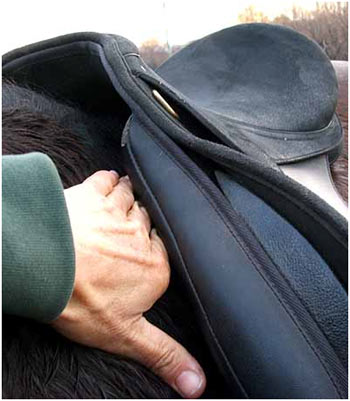
Then view the saddle from the front - does it clear the wither by at least 4 fingers? Even treeless saddles should have good wither clearance. Take a look at the back of the saddle, is it sitting too high above the horse, this can lead to the saddle swinging and rubbing your horse’s back.
Another issue with fit is the placement of the saddle. The design should allow the saddle to fit far enough back from the shoulder to reduce interference when the horse moves. If your saddle does not girth up in the horse's natural girth channel, when positioned back far enough, than it is not the right one. If you saddle continually moves and need tightening, it is the wrong fit.
Now it’s time to ride your horse so take notice of issues such as high head carriage, a sour expression and raising the head suddenly when you mount, reluctance to transition down gaits, reluctance to travel downhill easily, grunting and head tossing going down hill, reluctance to stride out freely, tail flicking on the downward slopes, and bucking when you canter.
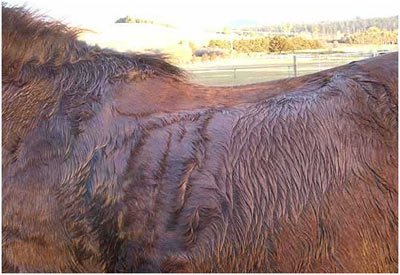
Ride until your horse has a good sweat under the cloth (more than an hour) and this will tell you even more about fit.
When you remove the saddle, there should be no sign of dry patches as seen above (bad fit). This indicates that the pressure on the muscle in this area is restricting blood and sweat flow that will lead to muscle damage and dead tissue, eventually growing white hair (as seen below).
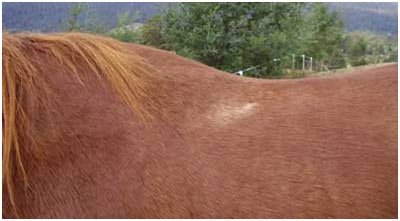
Choose an appropriate saddle keeping in mind what you will be using the saddle for. Dressage saddles are designed for dressage. Stock saddles are for mustering cattle. An all purpose saddle is designed for a little of everything, but not a lot of anything. Do a lot of jumping or long trails in an all purpose, especially on hills, and you will end up with a sore backed horse and eventually long term problems that will result in your horse becoming un rideable.
For trail riding choose a suitable saddle that distributes your weight more evenly, for example a half breed saddle. On to these you can clip your Drizzabone and a drink bottle, or choose an endurance saddle for longer rides (4 hours plus).
Unfortunately many saddlery shop staff lack personal experience of endurance riding, or competitive trail riding or even trail riding for that matter. If they are arena riders they may not be well suited to advise you which saddle to buy. Google some research, read forums, research saddle problems too.
Horses backs begin to become numb after the first 15 mins of being ridden, due to reduced blood flow. Endurance riders rest their horses by getting off and walking along side them. Trail riders are well advised to have a break halfway through the ride. This allows blood flow to return to the horses back temporarily to help reduce injury.
Quality Endurance and half breed saddles, plus some western saddles, have been designed with a wider expanse of paneling underneath covering the tree. This helps to lessen the pressure (psi or pounds per square inch) over the horses back by distributing the weight over a larger surface area.
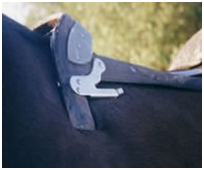
If we take a look at an example of a tree (the inside of a saddle below) you will be able to see this one is too narrow in the gullet, and would cause pressure sores resulting in dead hairs (white marks) if used on this horse. This is one of the most commonly seen injuries on trail riding horses, pressure sores.
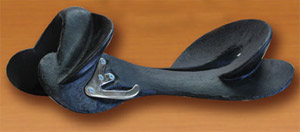
There are different designs for trees, for example the tree below would be used in a half breed saddle. Notice that it has a wider surface area than the example above so therefore it would dissipate your weight more evenly.
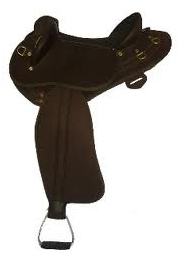
Here is an example of a half breed saddle
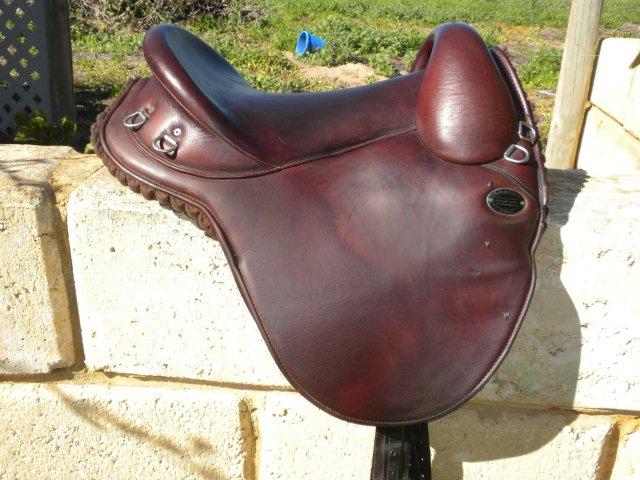
And an endurance saddle
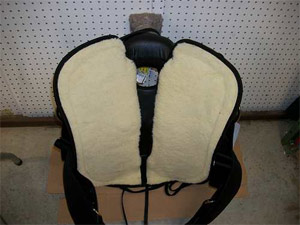
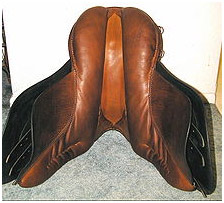
Notice below the comparison between the panels on the underside of a half breed saddle compared to an all purpose or dressage saddle. Which looks more comfortable for the horse to you?
Just because half breeds and endurance saddles do not look like the all purpose or dressage saddles that you have been used to does not mean that you would not be happy riding in one. Everyone I know who has been through the issue of bad fitting saddles and has eventually progressed to the right saddle have never looked back. The benefits they have enjoyed are problem free riding, and happy horses. Another type of saddle to consider is a treeless saddle. This I can recommend if you are a well balanced rider, and wish to feel more in touch with your horse.
Email a link of this article to a friend http://www.awebsite.com.au/Horse_Health.html#saddle
Other helpful information:
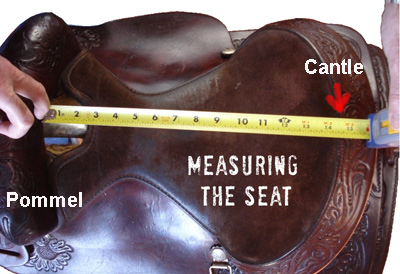
When sizing a saddle you can make an impression of your horse's wither with a wire coat hanger. This is a guide to gullet width. Gullets generally vary between narrow, semi quarter horse bars (medium), and full quarter horse bars (wide) Narrow might suit an Egyptian Arab or a narrow Thoroughbred for example, Semi QH bars would fit a medium framed stock horse or Thoroughbred type, and full QH bars would suit a solid Quarter Horse type. The inch size of the saddle relates to the length of the seat usually measured from the seam in the pommel to the back of the seat/cantle as shown below by the red arrow. Arabs are usually the hardest to fit a saddle too as they have one less rib and therefore need a shorter saddle. English saddles are measured to the rivet.
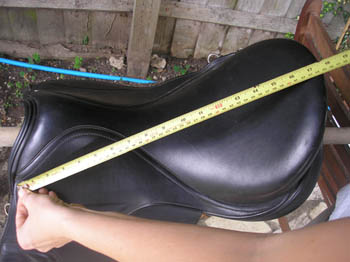
I recommend mohair girths as the ultimate in comfort for your horse, usually priced a round $90. The wider diamond shaped girths spread the pressure further over the sternum to create less pressure. I usually find a 30" girth is long enough for most horses in the medium size range 14 - 16 hh
Natural fibres are a godsend to horses, mohair girths and sheep skin pads, or quality Navaho pads, or natural (not synthetic) felt help to draw sweat away from the horse and keep them much cooler.
Links to good articles:
http://hauteecole.ru/en/press.php?sid=0&id=236
http://hauteecole.ru/en/press.php?sid=0&id=250
Cancer
There are many forms of cancer, first determine what you are dealing with if possible. A biopsy is not recommended because it can spread cancer cells into the blood stream spreading the cancer. The first course of action is to increase your horses immunity, for this I recommend Equi stig which your vet can inject for you on a monthly basis. This will hopefully cause the tumour to shrink a little making it more operable. Also I recommend altering your horse's diet, remove all sugars as this feeds cancer, so no molasses.
Some herbs help to stimulate immunity and act as antioxidants, add these to his diet, Mint, Thyme, Parsley, Dill, burdock, echinacea, garlic and clivers (whatever they are?) I have some of these growing in my garden and so add them fresh daily, else you can buy these from Lisa McCann herbs.
Other things to add are sulphur, Bicarb ( to change horse's blood PH which will inhibit cancer growth) and feed plenty of carrots which are a known antioxidant.. Vitamin E powder is recommended, failing this add black sunflower seeds which are high in vit E. I have even been trialing putting Vegemite on the lumps as it is high in Vit B12, only apply every few days.
I believe this will all help but may not cure your horse, surgery may be the only course of action. Please consult your vet as well as addressing your horses diet.
Grey horses are often more prone to cancer, a tip is to have a feel under a grey horse's tail for small lumps which are often the first tell tale sign that cancer is developing.
Greasy heel or mud fever
Caused by a combination of rain, sun burn and flies delivering the bacteria and mostly apparent on white heels and legs. Greasy heel manifests on the heel and mud fever spreads up the legs from the feet.
To cure greasy heel and mud fever it is necessary to remove all the scabs. First half fill a tough bucket with warm water (if possible) and a cap full of dettol. Soak the foot/leg until the scabs are soft enough to pick off. If you r horse wont entertain the idea of standing in a bucket use a warm wet towel if possible, wrap it around the heel to soak the scabs.
Remove all the scabs completely and treat with a thick layer of Filter Bac, or Dessitin cream (nappy rash cream) or Prednodern (from your vet only) to cure mud fever. Repeat daily for a few days until scabs are no longer present in quantity. One or two scabs can easily be picked off without the need for soaking in water. Continue to apply cream daily until completely cleared. Check other feet as mud fever can spread.
You will notice that the heels most susceptible to greasy heel are usually white in colour. This is because the un pigmented skin is more prone to sunburn, which subsequently cracks allowing bacteria to manifest. After periods of rain and then hot sunny days it is well recommended to apply Filter Bac as a antibacterial sunscreen which will prevent greasy heel from eventuating. Look out for the pre cursor which is very pink or red skin.
Rain scald
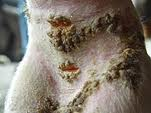
Rain Scald is caused by periods of heavy rain, the force of which damages the hair root causing it to die and a bacterial infection begins breeding in the dead follicle. The result is large scale hair loss, usually starting within a couple of days and up to a week after the rain. The hair tends to fall out in little clumps sometimes with yellow pus under each small clump when the infection is raging.
Wash your horse thoroughly from head to toe in Chlorhexadine (Microshield by another name) this is the concentrated form. Diluted solutions in pet shampoos may not be as effective. It is expensive stuff, but it really works. Purchase through chemists or vets.
First soak your horse with the hose, then pour some Chlorhexadine into a bucket, add a splash of water so not to dilute it too much, and lather the horse up with a sponge all over and leave for 10 min's, during this time pick off all the scabs into a bucket and throw them away. Keep lathering up the worst areas. Then rinse very thoroughly. This should clear it up after one application, if not follow up one week later with another wash. In between time treat bare patches with Filter Bac so they do not get sun burnt. This also helps to heal the affected areas. Be sure to put a rain cover on before the next heavy downpour to prevent a further out break.
Wash all rugs, halters and saddle blankets to kill the bacteria to prevent re- infection.
Prevention is better than cure, rug your horse with a suitably light waterproof rug during periods of heavy rain. A combo is recommended to prevent rain scald developing on the neck and shoulder area.
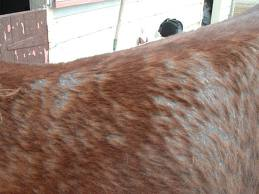
Seedy Toe or White Line Disease
An all but too common condition caused by a build up of lactic acid in the feet which dissolves the connective tissue between the hoof wall and the sensitive laminae (or sole of the foot)
As the separation occurs the space between the hoof and the sole widens making a perfect breeding ground for a black smelly fungus that is commonly known as seedy toe or white line disease.
Usually the first symptom will be a tender foot or a crack appearing usually at the front of the toe. As the disease moves up towards the coronet band the crack moves up with it. This is a fair representation of the extent of the spread of the disease. Once it reaches the coronet band it can cause the the hoof to separate completely and the horses foot takes on a cloven hoof appearance. If left unchecked this can result in damage to the pedal bone (coffin bone) and would enter the realm of your horse having foundered.
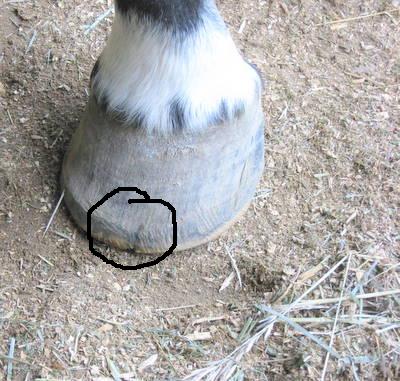
The cause of the build up of lactic acid usually stems from over feeding, over weight horses and lack of exercise to burn up the lactic acid that naturally forms in the muscles. Exercised horses do not as a rule suffer from seedy toe unless they are continuously overfed.
If caught early seedy toe can be cured relatively easily. A farrier should attend your horse and cut away a small window to allow air to circulate into the diseased area to help dry it out and make it less inviting for fungus to grow. Have your farrier attend every 6 weeks and trim away the diseased area. If the crack goes all the way to the coronet band it may be time to involve your vet in tandem with your farrier. In this case the vet will cut away the front of the hoof exposing the disease all the way up to the coronet band, and the farrier will create a shoe to hold the hoof stable until it regrows sufficiently not to risk splitting. This can be lengthy and costly (around $1000 in total treatment costs over several months) The farrier will have to return every 4-5 weeks to ensure the shoe does not come off.
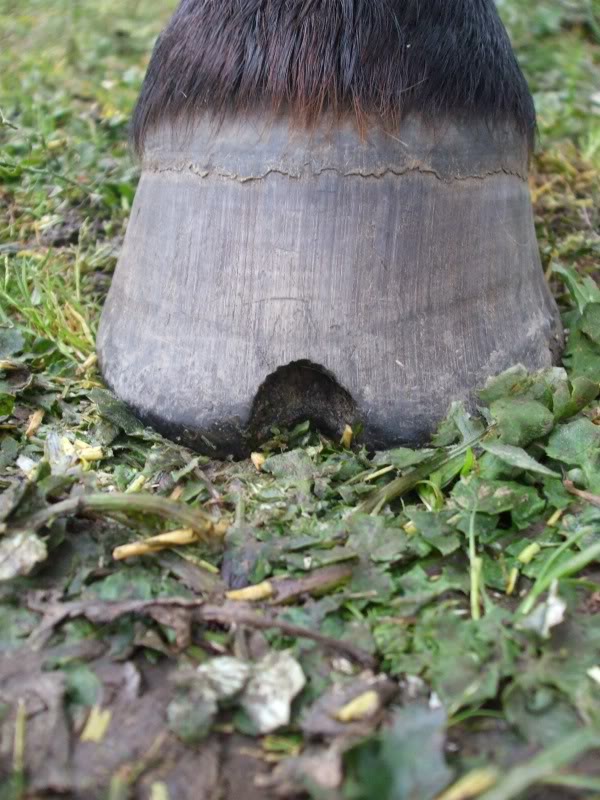
Secondly, picking out the diseased area with a piece of wire and inserting Vaseline mixed with copper sulphate power (available from any produce store) into the hole several times a week.
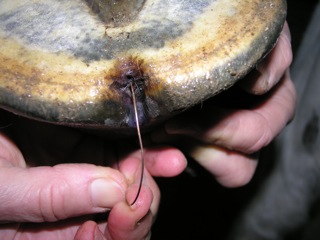
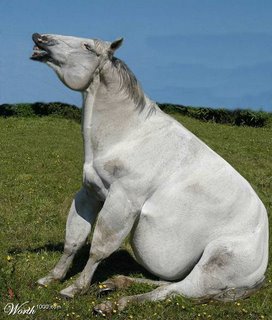
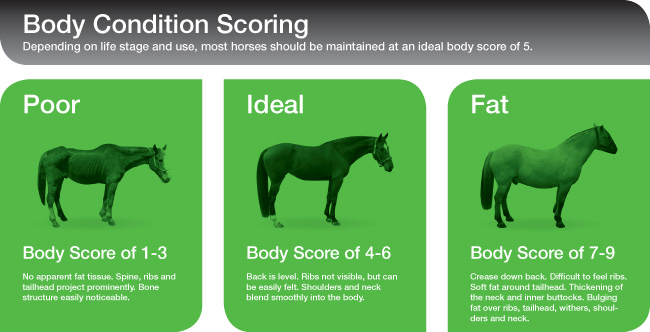
Thirdly reduce the amount of feed your horse is receiving if he is over weight (see Body Condition Score chart) This is critical to curing this disease. If feeding lucerne hay, change to grassy lucerne and eventually to grassy if your horse will accept it. If feeding a hard feed change to a grain free feed if possible, remembering to change your feed gradually over a period of weeks so not to cause colic. If your horse does well on grass, do not feed at all. Just insure he gets his minerals, salt and calcium in a small chaff and copra mash twice a week. He will soon get used to the change if he has no other options.
And finally and most importantly, exercise your horse. Start with gentle lunging as his feet may be very tender. As he loses weight, and becomes gradually fitter increase the exercise to ridden work and lunging. This will encourage growth of the hoof along with adding biotin to your horses feed (which feeds hoof growth) the new hoof takes 6 months to a year to grown down depending on your horse.
There is no quick fix for Seedy Toe unfortunately. But if you follow this advice you will see results and have success.
Splints
Read this article, it covers every aspect
Worming
Horses can become worm infested and this can cause serious ill health and even colic. Signs are ill thrift, weight loss, poor coat. If you look at your horses faeces you can often see tiny pin holes left by the worms. It is safe to worm every 10 - 12 weeks. we recommend every 10 wks in summer and 12 wks in winter. It is important to rotate your wormers, because worms are known to become resistant to some chemicals and therefore do not die which will result in your horse becoming a carrier for resistant worms.. It is recommended to rotate an ivomectin based wormer like Equimax with an Oxfendazole based wormer for example Strategy T.
Strategy T (Oxfendazole...1g Pyrantel Embonate...7.0g) to prevent your horse from building up ivomectin resistant strains of worm in their gut, by using a different chemical this kills those worms that are resistant preventing your horse from becoming a carrier for resistant worms.
Suppliers
Lisa McCann Herbs Supplier of quality herbs & supplements for horses & other animals.